


Defense for Hit and Run Charges in San Diego County
If you are in an accident and commit a hit and run, you could end up behind bars —even if the crash wasn’t your fault. A conviction could leave you facing other consequences as well, including DMV penalties, victim restitution, immigration issues, and more.
Attorney Peter M. Liss has represented dozens of clients accused of misdemeanor and felony hit-and-run offenses, as well as other criminal traffic crimes in Vista and North San Diego County.
Call (760) 643-4050 now to schedule a free, no-obligation consultation!
California Hit and Run Laws Explained
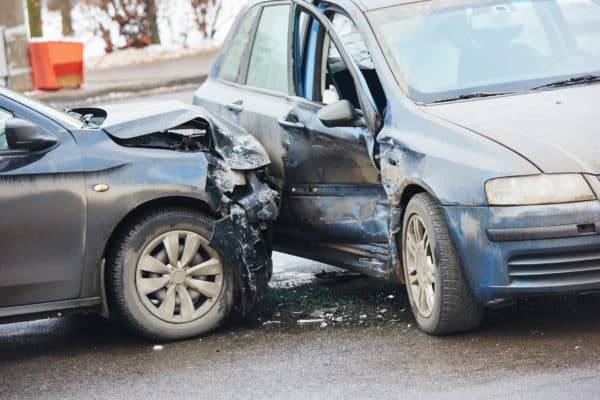
When you get in a car accident, you are legally required to provide the other party with your driver’s license, vehicle registration, and address. If you flee the scene of the accident without providing this information, you can be charged with hit and run under California Vehicle Code 20002 (VC) or 20001 (VC).
“You can also be charged with these offenses if you provide fraudulent information to the other party after an accident,” notes attorney Peter Liss. Providing false information to a police officer is a distinct crime, punishable under 31 (VC).1
Note that you can still be charged with hit and run even if you didn’t cause the accident.
Vehicle Code 20002 (VC) Vs. 20001 (VC)
In California, the specific hit and run vehicle code will be determined by whether the accident caused only property damage or resulted in injury or death. Vehicle Code 20002 (VC) applies in cases limited to property damage, while 20001 (VC) applies when another person is injured or killed.
| Charge | General situation | Potential classification |
|---|---|---|
| 20002 (VC) | Property damage | Misdemeanor |
| 20001 (VC) | Injury or death | Misdemeanor or felony, based on circumstances |
Hit and Run in Property Damage Cases: 20002 (VC)
Under 20002 (VC), you can be charged with misdemeanor hit and run after causing even a minor amount of damage to someone else’s property. “You can be charged even if your vehicle is the only one involved,” explains Liss. “You could be arrested and convicted for running over someone’s pet or hitting a neighbor’s mailbox, for example, as long as you neglect to provide the victim with your information.2
Hit and Run Causing Injury or Death: 20001 (VC)
When a driver leaves the scene of an accident after someone was injured or killed, they can be charged under 20001 (VC).3 Beyond providing their license and registration information, drivers charged with this offense are also required to provide reasonable assistance to injured parties and, when someone dies, notify the California Highway Patrol or local police.
This offense can be filed as a misdemeanor or felony at the discretion of the prosecutor.
When Can Hit and Run Be Charged as a Felony in California?
Hit and runs can be charged as a felony if they result in injury or death and are filed under 20001 (VC); however, these cases may also be misdemeanors at the prosecutor’s discretion. The prosecutor will base their charging decisions on:
- The circumstances leading up to the incident.
- Whether the defendant used alcohol or drugs before driving.
- The severity of the injuries.
- The driver’s conduct after the collision.
- The criminal and driving records of the driver.
In some cases, a defense attorney can help convince the District Attorney to file the charges as a misdemeanor based on the facts of the case.
Related Criminal Traffic Charges
While hit-and-run charges are often stand-alone offenses, they may sometimes be charged alongside other crimes, such as:
- DUI
- DUI causing injury
- Reckless driving
- Evading police
- Driving on a suspended license
- Driving without a license
- Street racing
- Vehicular assault
- Joyriding
- Vehicular homicide
What Are the Penalties for Hit and Run in California?
Sentencing for hit and runs is based on the specific charges, the severity of the property damage or injuries suffered by the victims, and the defendant’s record. Generally speaking, defendants will face incarceration, fines, victim restitution payments, and DMV consequences.
If the victim injured in a hit-and-run accident dies, the defendant can even face vehicular manslaughter or homicide charges.
Penalties for 20002 (VC)
When hit and runs involve only property damage, they carry a maximum penalty of six months in jail, although many defendants are sentenced to summary probation instead.
Penalties for 20001 (VC)
When a hit and run results in even a slight injury, the charge is a wobbler, meaning it can be filed as a misdemeanor or felony at the prosecutor’s discretion. If 20001 (VC) charges are filed as a misdemeanor, they are punishable by up to one year in jail and a fine of up to $10,000. As a felony, the maximum sentence is up to four years in prison.
Alternative Sentencing
In many hit and run cases, an attorney may be able to have the charges reduced or secure an alternative sentence, such as a diversion program or community service, to help you avoid incarceration.
DMV Consequences
Aside from incarceration and fines, you may also face additional penalties through the Department of Motor Vehicles. If you are convicted of 20001 (VC), your license will be suspended for one year, and you will be required to obtain SR-22 insurance to reinstate it.4
If you have at least two recent points on your driving record before being charged under 20002 (VC), your license may even be suspended for a hit and run involving only property damage.
A defense lawyer may be able to help you avoid these license suspensions by requesting a hearing with the DMV.
Additional Consequences
As a crime of moral turpitude, those convicted of 20001 (VC) may face additional repercussions outside of the criminal courts and DMV. Crimes of moral turpitude can sometimes result in the loss of professional licenses and may result in immigration consequences.
What Must the Prosecution Prove in a Hit and Run Case?
To prove that someone is guilty of a hit and run, the prosecution must show you met all the elements of the crime, specifically that you:
- Were driving a motor vehicle involved in a collision.
- Knew or reasonably should have known the collision occurred.
- The collision resulted in property damage, injury, or death.
- Intentionally left the scene without providing your personal information, including your driver’s license and registration.
In cases involving injury, drivers are also legally required to offer assistance to any injured parties, whether that means offering transportation or calling an ambulance. When someone dies at the scene of an accident, the drivers must also report the death to the California Highway Patrol or a local police agency.
What Defenses Work Best in California Hit and Run Cases?
“In my experience, there is no single best defense for these cases,” says Liss. “Each client’s situation is unique.” Sometimes, the most sensible approach is to negotiate a plea deal to minimize the charges or sentencing. In other cases, it may be more advantageous to contest the charges.
These are some of the most common defenses lawyers use in hit-and-run cases in San Diego County:
No Knowledge of the Accident
To prove a hit and run charge, prosecutors must show the driver knew (or should have known) an accident occurred. If they cannot prove the facts beyond a reasonable doubt, they may be unable to secure a conviction. Dashcam footage can provide invaluable evidence for this defense.
“A driver who caused an accident may still owe the other party financial compensation if this defense is successful,” notes Liss.
Mistaken Identity
These cases often hinge on the memories of victims and witnesses, who may have only had a fleeting glimpse of a vehicle for a matter of seconds. People are frequently accused of hit and run charges because they or their vehicle match the description of the person or car involved in the incident.
Even if your car was the one in the accident, the prosecution must show you were the one driving, especially if you share the vehicle with other drivers. If there is any question about who was involved in the hit and run, you may be able to avoid a conviction if you have a good alibi or other proof that you were not involved in the accident.
No Damage Occurred
“If the evidence does not establish that qualifying damage or injuries occurred, the prosecutors will be lacking an essential element of their case that is required for a conviction,” explains Liss.
However, it is common for people to flee the scene without fully evaluating whether their vehicle caused any damage. In these cases, it could be seen as a confession if you say you left without exchanging information because you didn’t see any damage or injuries. Always stay silent if police are questioning you about a suspected hit and run.
No One Was Injured
While not a full defense to the charges, if no one was injured but property damage occurred, you should only be charged with 20002 (VC). If you were accused of 20001 (VC) but no one was injured, your attorney may be able to seek a reduction of the charges.
It Was Not Safe to Stop
If it was unsafe for you to pull over and exchange information, you have the right to drive to a safe place to do so.5 Similarly, if the other driver threatens your safety, it is legal to protect yourself from harm by driving away.
Even in these situations, California law requires you to contact the police as soon as possible to report the accident. By doing so, the police can provide the other driver with your information, allowing them to process a claim with their insurance company. If you have reason to believe the driver presents a serious threat to you long after the accident, your defense lawyer may be able to help you secure a restraining order to protect yourself.
You Were Seeking Medical Attention
“You can legally leave the location of an accident to seek emergency medical assistance for you, your passenger, or someone else injured in the accident,” says Liss. However, you must report the incident to hospital officials or the police so they can identify anyone else involved and provide them with your contact information.
If you are charged with a hit and run, even though you were seeking emergency care and provided the police or hospital staff with information about the accident, the charges should be dropped.
Your Rights Were Violated
Police must have reasonable suspicion to stop your vehicle and probable cause to search it.6 If they violated your rights, any evidence uncovered as a result must be suppressed. In some cases, this can be enough to result in the charges being dropped or reduced due to a lack of admissible evidence.
Paying for the Damages
In cases involving only property damage, prosecutors will sometimes agree to drop hit and run charges if the accused pays for the property damage and the victim agrees the case doesn’t need to be prosecuted. “In my experience, victims are likely to agree to let the prosecutor drop the charges if you agree to a civil settlement to cover the damages,” says Liss.
Keep in mind that paying for the damage does not automatically eliminate a criminal charge, and the prosecutor, not the victim, ultimately makes charging decisions.
What If the Police Want to Question Me About a Hit and Run?
If police or sheriff’s deputies ask you to come to the station, bring in your vehicle, or provide a detailed statement about an accident, speak with a criminal defense attorney first. Do not speak with the police without a lawyer present. Statements about what you knew, saw, or did after an accident can become important evidence in a hit-and-run investigation.
As your lawyer, Peter Liss can advise you on your rights and accompany you during police questioning.
How a Hit and Run Defense Attorney Can Help
Depending on the circumstances of your case, Attorney Peter M. Liss can:
- Investigate the accident.
- Seek to have you released from jail with low or no bail.
- Review the police reports and available evidence.
- Obtain evidence supporting your defense.
- File motions to suppress improperly obtained evidence.
- Seek dismissal or reduction of the charges.
- Negotiate for reduced or alternative sentencing.
- Represent you in court when necessary.
Speak With a Vista Hit and Run Defense Attorney
If you have been accused of hit and run, speaking with a defense attorney before discussing the circumstances with investigators can help you understand your rights and options. Attorney Peter M. Liss represents clients facing misdemeanor and felony hit and run charges in Vista and throughout North San Diego County.
Call (760) 643-4050 today to start fighting the charges.
Frequently Asked Questions
What Is the Difference Between 20001 (VC) and 20002 (VC)?
While both charges apply to hit and runs, 20002 (VC) is a misdemeanor that carries a maximum sentence of six months in jail. This charge only applies if there was only property damage. If someone was injured even slightly, the charges are filed as 20001 (VC), which can be a misdemeanor or felony punishable by up to four years in prison.
Do I Have to Go to Jail for a Hit and Run in San Diego?
No. Some people convicted of this crime will be sentenced to probation rather than jail or prison.
Can You be Charged with a Hit and Run When Your Vehicle Was the Only Thing Damaged?
No. This charge only applies when the defendant damaged another person’s property or caused injury to another individual.
Can I be Charged with a Hit and Run When I Didn’t Cause the Accident?
Yes. If you are involved in an accident and neglect to give the other party your information, you can be charged with this crime, even if the other party was responsible for the crash.
Do I Have to Appear in Court for a Hit and Run?
Whether or not you will need to personally appear in court largely depends on the severity of charges. In some misdemeanor cases, your attorney may be able to appear on your behalf. In felony cases, you will be required to appear at most court hearings.
What Should I Do If I Am Being Investigated for Hit and Run?
Stay silent and do not speak to police without your attorney present. Even seemingly innocent statements can sometimes be used as evidence against you. A lawyer can help protect your rights and ensure you do not say anything to harm your case.
Legal References
- Vehicle Code 31 (VC) (California Legislative Information) ↩︎
- Vehicle Code 20002 (VC) (California Legislative Information) ↩︎
- Vehicle Code 20001 (VC) (California Legislative Information) ↩︎
- Section 7: Laws and Rules of the Road (California DMV) ↩︎
- So You’ve Had an Accident, What’s Next? (California Department of Insurance) ↩︎
- Pretext Stops (City of San Diego) ↩︎


